
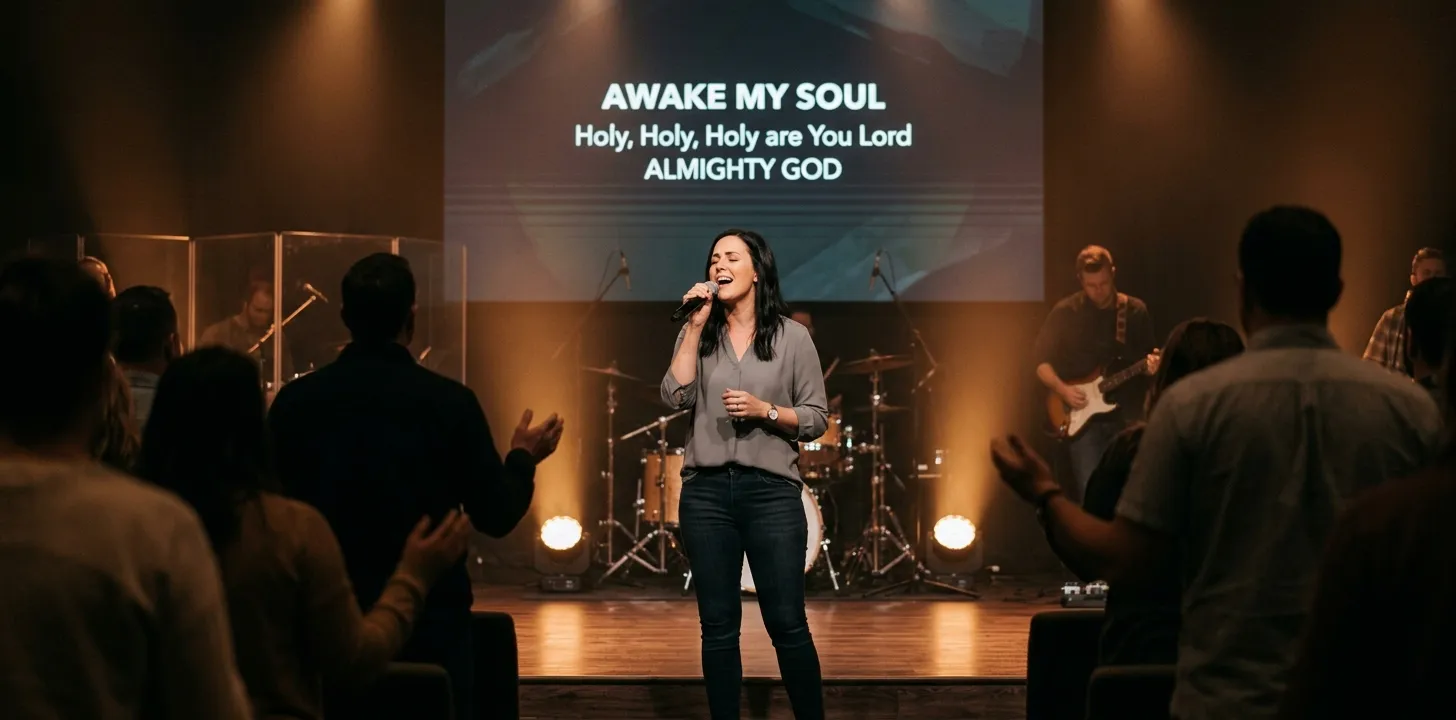
The Silent Disruptor: Why Transitions Matter
Every worship director knows the feeling: the band just finished a high-energy anthem, the congregation is leaning in, and suddenly, there is a thirty-second gap while the media team scrambles to find the next slide or the transition track glitches. In that moment, the "flow" of worship is broken. The congregation is pulled out of their state of vertical focus and back into the mechanics of the room.
Seamless transitions aren't just about technical proficiency; they are about stewardship. When we manage our technology with intentionality, we remove the friction that keeps people from engaging with the presence of God. As worship leaders, we are the curators of an environment, and our tools should be invisible, acting as a bridge rather than a barrier.
The Anatomy of a Flow-State Service
Creating a flow-state in a worship service requires a blend of spiritual preparation and logistical precision. It begins long before the first chord is struck on Sunday morning.
1. The Pre-Service Architecture
Many churches treat the 'pre-service' time as dead air. Instead, use your media platform to set the tone. Whether it’s a looping motion background with soft, instrumental ambient music or a countdown that integrates community announcements, the environment should feel curated. This signals to your congregation that the worship experience has already begun the moment they step through the doors.
2. Eliminating 'Technical Hiccups'
Technical errors are almost always a result of either poor communication or poor preparation. Using a centralized platform like Cloud of Worship allows your entire team—from the drummer to the projectionist—to see the same cues. When the worship leader decides to repeat a chorus, a seamless system allows the lyrics to follow suit instantly, without a frantic search for the right slide.
3. The Power of Intentional Transitions
Transitioning between songs or from worship into the sermon shouldn't be silent, awkward, or abrupt. Consider these strategies:
- Musical Pads: Use subtle ambient pads that hold the key of the song, allowing the worship leader to speak or pray without the sound dropping out entirely.
- Visual Continuity: Ensure your slide templates, fonts, and motion backgrounds maintain a consistent visual language throughout the entire service. Jarring changes in aesthetic distract the eye and disrupt the spirit.
- The 'Bumper' Bridge: Use short, high-quality video bumpers to provide a visual 'reset' when transitioning from a high-energy worship set to a reflective sermon intro.
Empowering Your Volunteers
Technology is only as good as the people operating it. Often, volunteer burnout occurs because the tools provided are too complex or unreliable. If your projection software is clunky or requires a massive learning curve, your volunteers will be too stressed to worship themselves.
By simplifying the interface and providing clear, cloud-based access to the service order, you empower your team to serve with confidence. When a volunteer knows exactly what is coming next, they don't just 'run the slides'—they become active participants in the liturgy of the service.
The Spiritual Dimension of Logistics
It is easy to get caught up in the 'SaaS' side of church management and forget the 'why.' We optimize these systems because we want to remove every obstacle that stands between a person and their Creator. When we minimize technical distractions, we create more room for the Holy Spirit to move.
Consider your church's workflow this week:
- Is your lyric projection helping or hurting the focus?
- Does your team have the resources they need to succeed?
- Are your transitions planned with as much care as your setlist?
Final Thoughts: Worship as a Whole
Technology in the church is a tool, not a distraction. When we use it with excellence, we are honoring the congregation and removing the 'noise' of the world. As you prepare for your next service, don't just look at your chords or your scriptures—look at the spaces in between. That is where the worship happens. Elevate those moments, be intentional with your transitions, and watch how your congregation’s engagement shifts from fragmented to focused.