
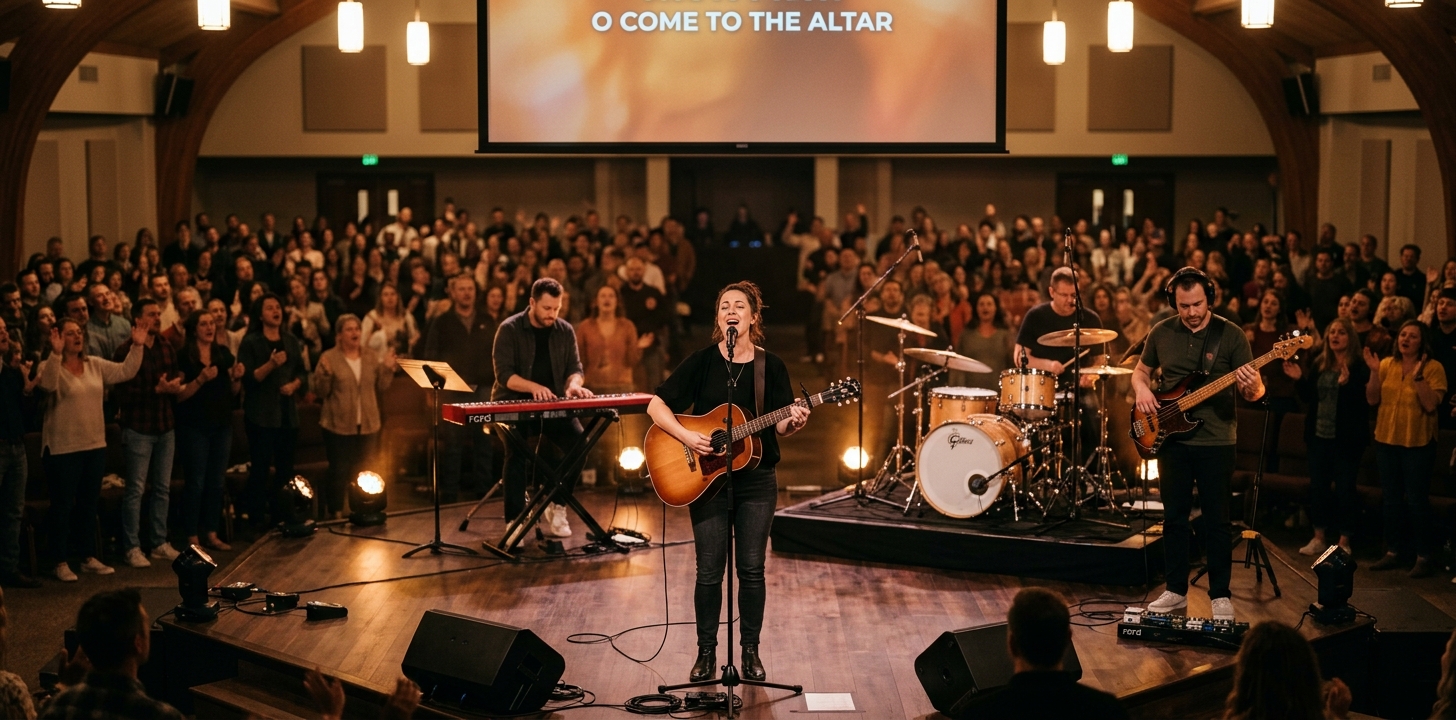
The Silent Power of the Transition
In the rhythm of a Sunday morning service, the moments between songs are often treated as 'dead air.' Worship leaders, bands, and media teams frequently view transitions as necessary pauses—times to flip pages, adjust cables, or quickly check the next slide on the projection screen. However, for a congregation seeking to enter into a space of genuine worship, these transitions are not just pauses; they are the connective tissue of the experience.
When transitions are clumsy, they act as a speed bump, jarring the congregation out of the spiritual atmosphere and back into a state of self-consciousness. When they are intentional, they become a bridge, allowing the spirit of worship to flow uninterrupted from one theme to the next. Mastering this 'art of flow' is one of the most effective ways to foster deep, undistracted engagement in your church.
Rethinking the 'Gap'
The goal of a seamless transition is to keep the congregation focused on God, rather than the mechanics of the service. Here is how your worship and tech teams can collaborate to eliminate the noise.
1. Musical Continuity
One of the most effective tools for a worship leader is the 'musical bed.' Instead of stopping completely after a high-energy anthem, have the keyboardist or pad player hold a sustaining chord in the appropriate key. This provides a sonic foundation that allows the leader to transition into a prayer, a scripture reading, or a softer song without the jarring sensation of silence.
- Key Tip: Ensure your band knows the 'key of the next song' before the current one ends. Even a simple modulation or sustaining note can bridge two completely different tempos.
2. The Role of the Media Team
As a leader, you may have a beautiful musical transition prepared, but if your projection software is lagging or the wrong slide is displayed, the moment is lost. Technology should be a silent partner. Using tools like Cloud of Worship, your media team can prepare transitions in advance, ensuring that lyrics, background visuals, and scripture verses are ready before the worship leader even signals the change.
- Communication is Key: Use in-ear monitors or a simple visual cue system (like a pre-agreed hand signal) to let your projectionist know when you are moving into a spontaneous moment. When technology moves at the speed of the Spirit, the congregation remains undistracted.
Creating Intentional Moments
Transitions are not just about musical filler; they are the perfect moments to guide the heart of the church. Here are three types of intentional transitions:
- The Scriptural Bridge: Use a verse that ties the lyrical themes of the two songs together. Having this pre-loaded in your presentation software allows for a smooth fade-in while the band plays softly.
- The Reflective Pause: Sometimes the best transition is a moment of silence—not an awkward one, but a 'sacred pause.' Invite the congregation to internalize the message of the previous song before moving forward.
- The Prayer Pivot: A short, 30-second prayer can act as a natural reset for a congregation. It acknowledges the transition and invites the Holy Spirit to guide the remainder of the set.
Practical Steps for Your Team
If you want to refine your service flow, start by auditing your next rehearsal. Don't just practice the songs; practice the spaces in between. Ask yourselves:
- Do we have a plan for dead air? Every transition should have an assigned 'owner' (e.g., the worship leader speaks, the keyboardist plays a pad, or the screen displays a thematic image).
- Are our transitions rehearsed? Treat the 30 seconds between songs with the same level of care as the bridge of a song.
- Is our tech synced? If you are relying on manual slide changes, move to a service management platform that allows for automated loops or seamless transitions between lyrics and announcement slides.
The Goal: Removing Distraction
Ultimately, the 'art of flow' isn't about being flashy or producing a perfect theatrical performance. It is about removing the friction that prevents a person from connecting with the Creator. When we remove the 'how' and 'what' of the technical side, we allow the congregation to focus entirely on the 'Who.'
By intentionally planning your transitions, you show your congregation that you value their time and their spiritual journey. You are creating a space where they can lose track of time and find themselves in the presence of God. Start small, communicate clearly between your worship team and tech volunteers, and watch how a little bit of intentionality can transform the entire worship experience.